
Transforming our present and futures: The Repair Campaign’s Sherween Gonzales’ work in reparatory justice in Saint Lucia
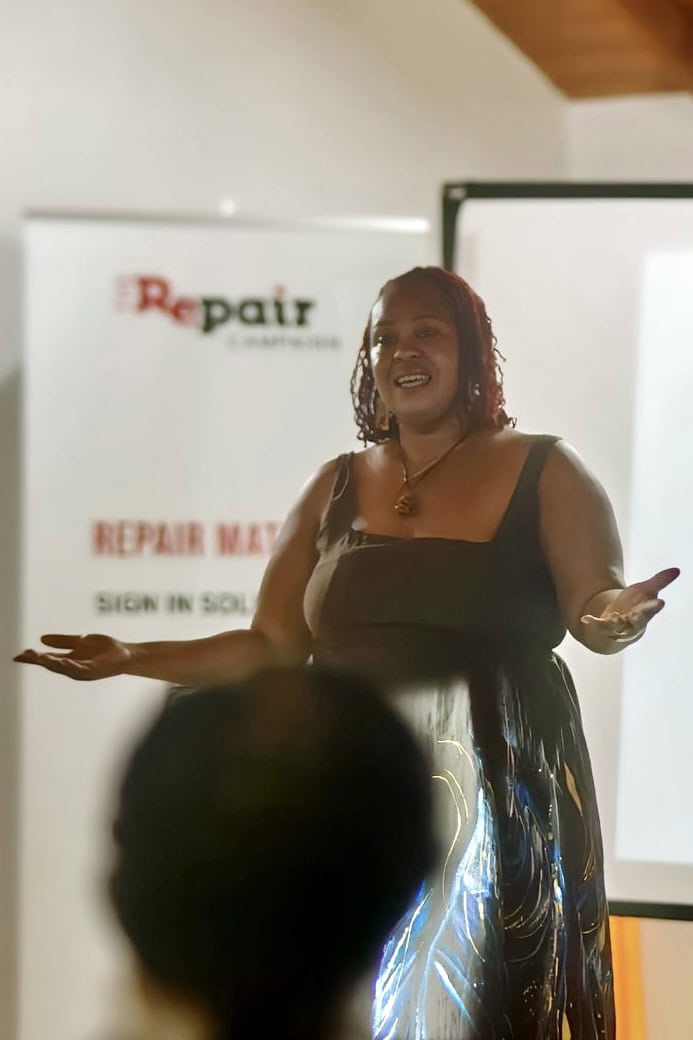
Could you briefly introduce yourself and your work?
My name is Sherween Gonzales, and I am a community organizer, educator, and cultural worker based in Saint Lucia. My work sits at the intersection of advocacy, history, and people-powered organizing. I currently serve as the Community Organizer for Saint Lucia with The Repair Campaign, where my role is to help build relationships, develop leadership, and mobilise communities to support reparatory justice across the island.
My journey into this work has been shaped by both personal experience and professional practice. As a former educator, I have long believed that meaningful change happens when people understand their history, see themselves as agents of that history, and are supported to act collectively. Reparatory justice, for me, is not only about acknowledging the crimes of the past, but about transforming the conditions of the present and future through organised, intentional action.
Could you talk about the histories of St Lucia in the context of reparatory justice movements in the Caribbean?
Saint Lucia holds a particularly important place within movements for reparatory justice. Like many Caribbean nations, our history is deeply marked by enslavement, land dispossession, and colonial extraction. The legacies of these systems are still visible today in patterns of land ownership, food insecurity, economic dependency, and limited access to opportunity for many of our people. These realities are not accidents of development; they are the unfinished business of colonialism.
At the same time, Saint Lucia has always been a site of resistance, resilience, and refusal. As was powerfully articulated by Mr. Earl Bousquet at the Meet the Organiser launch, Saint Lucia has “a brave and long history” of struggle against colonialism, one that must be understood from the standpoint of the hunted, and not the hunter. A defining example of this resistance is the June 19th, 1795 revolution in Soufrière, led by Flor Gaya, in which formerly enslaved Africans and maroons rose up against British colonial rule. This rebellion was not an isolated moment, but part of a broader tradition of organised resistance, land defence, and collective refusal that has shaped Saint Lucia’s political and cultural consciousness. Remembering figures like Flor Gaya grounds reparatory justice in lived history, reminding us that our people have always resisted oppression and asserted their right to freedom, dignity, and self-determination.
What are you looking forward to in this ongoing regional movement?
What gives me hope in this moment is the growing regional clarity and confidence around reparatory justice. Across the Caribbean, we are seeing stronger coordination, deeper public education, and more intentional organising that centres youth, culture, and community leadership. In Saint Lucia, there is a real opportunity to build public pressure that encourages our government to take a firmer, more visible stance in calling for accountability from former colonial powers, including the United Kingdom.
I am particularly looking forward to how regional movements continue to link reparatory justice to concrete issues such as land access, food sovereignty, education, and youth development. These connections help people understand that reparations are not abstract or symbolic, they are about repairing harm in ways that materially improve people’s lives.
The ongoing regional movement for reparatory justice is, at its core, about collective care, accountability, and possibility. I am honoured to be part of this work in Saint Lucia, and excited about what we can continue to build together across the Caribbean.