
A Brief on the Hope for the future of Reparatory Justice in Saint Lucia and the Wider Caribbean.
Ambassador June Soomer, statement shared with The Repair Campaign
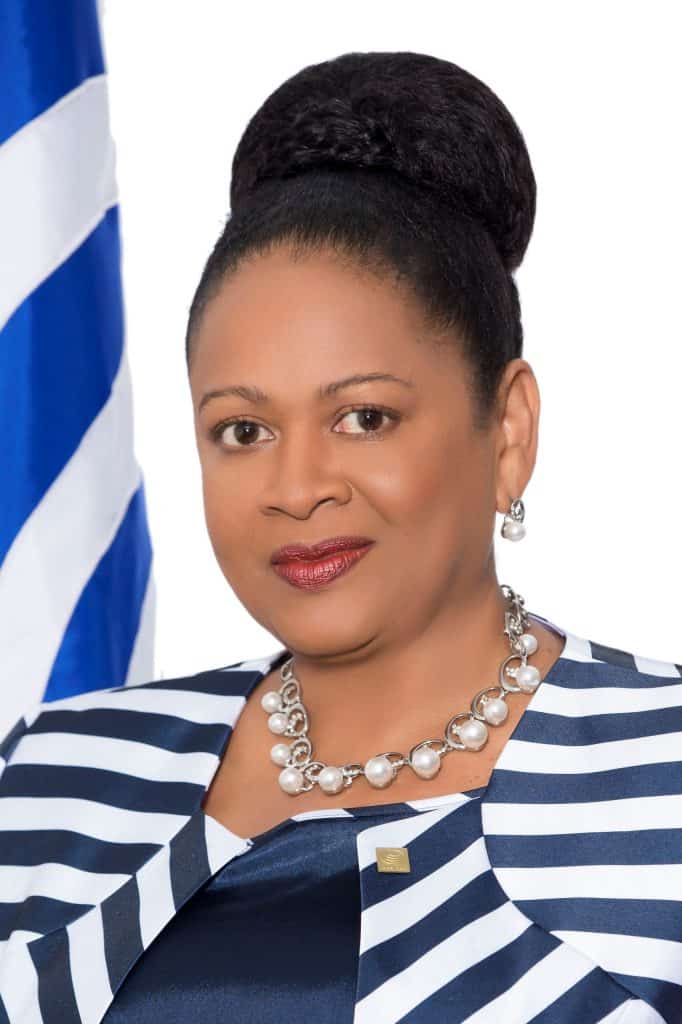
Current international and local developments require that there is some urgency in the pursuit of reparatory justice for Saint Lucia and the Caribbean. As a historian, I evoke Sir Arthur Lewis who connected development and reparatory justice and articulated that, “translated into our problem, the black group is disadvantaged by its past; it is pressured into believing that it cannot catch up, because its culture is noncompetitive. A situation has been created in which “equilibrium” is not equality, attained and sustained by natural ability, but rather a basic inequality partitioned by racial, religious, gender and other barriers…” [ Arthur Lewis: The Economics of Racial Inequality [1985].
Almost two centuries after the abolition of enslavement, there is still a portioning of development based on colour and race, and the Caribbean and Latin America have the highest inequality in the world. To deal with race and of course colourism in the region, means not just advocating for structural, financial and environmental adjustments but transformation of mindsets and advocating for major modifications in our notions of equality. It is unfortunate that independence put a full stop to the calls for justice and was not envisaged as a part of a process of freedom that must demand reparations.
Saint Lucia and the Caribbean have a right to sustainable development, which cannot be achieved without reparations. For us this is about sustaining our humanity and unless we confront the very troubling phenomenon of the rewriting of our history, our invisibility will be etched into our future. There is a sordid sanitization coordinated globally, of the history of our colonization, enslavement and dehumanization which will persist, if we dismiss the overhauling of our entire education system.
The people of the region are afraid to address reparations because we are not comfortable in our own humanity, thinking that we deserved the brutality. If our education and our research does not counteract this, our colonized minds will continue to absorb the rhetoric that our humanity commenced when we were taken out of Africa and civilized. We cannot continue to perpetuate incomplete stories, inferences and innuendo, that deny our whole humanity.
Over the last ten years, since Saint Lucia and the Caribbean started the conversation on reparatory, justice, many emerging questions reveal three main issues: We hold our selves responsible for the injustices we suffered; we think that we will deal with our trauma by not confronting our abusers; and we have been so abused hopelessness has set in, so we think the pursuit of reparatory justice is futile. We come up with bumper sticker phrases like: Let us forget the past; and we can pull ourselves up by our boot straps, internalising victimisation to avoid confrontation. How can we forget the past when it has so defined our present and will derail our futures.
Long before there was formal schooling for Africans and their descendants, there was community learning. There is an African saying which states “If you think education is expensive try ignorance.” If our people do not know what it is and how it relates to them, how will it be achieved. We must intensify public education on reparatory justice.
In the Caribbean the remaining colonial institutions must be razed so that new thinking on development can emerge. Governments must be held accountable for continuing to perpetuate, knowingly or unwittingly, the discrimination that does not foster development justice. We must commence the repair ourselves for there to be sustainable development. This is a time of real change, when the world recognises that we have a right to reparations, a right to equality, a right to a voice globally. That we have collective rights and rights as individuals.
The time is now for the Caribbean to come to the realisation that chattel enslavement commodified the wombs of women of African descent. They alone could reproduce enslaved children and hence labour, a factor of production on which capitalism was consolidated. The legacy is that women of African descent have to manage a marginalised identity that keeps them at the bottom of all global social statistics. Reparatory justice must recognise that racialised chattel enslavement was not gender neutral.
People in the Caribbean will remain complacent about the global shifts which further consolidate power in the hands of colonisers. The Caribbean needs a new development paradigm that must be built around equality for the collective. It was the original resistance vision for the Caribbean and it must once again occupy our thinking. Not one of us can attain development, far less sustainable development without fighting for collective rights and collective humanity through reparations – for this justice is both pan-Caribbean and pan- African. Consolidating our identity within the 6th region of the African Union is fundamental to its success. Let us educate ourselves on all aspects of reparatory justice.