
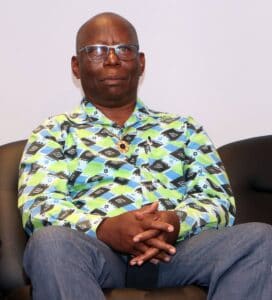
Some thoughts on Trinidad and Tobago by Dr Claudius Fergus
Claudius Fergus is a historian, a former Chair of the Trinidad and Tobago National Committee for Reparations and an activist for social justice.
1st April 2026
Undoubtedly, the upsurge in advocacy for reparation is an unprecedented dynamic uniting the peoples of the Caribbean. Although the region is united on CARICOM’S Ten Point Plan, there are different tipping points. For the Dutch-ruled and US-ruled territories, it is decolonisation. For Trinidad and Tobago, the National Committee on Reparations (disbanded by the government in October 2025) made reparation for indigenous peoples an equal priority. The Committee also had to reconcile with Tobago’s perception of being in a neocolonial relationship with Trinidad.
Historians of Trinidad and Tobago emphasise the trope of two distinct colonies up to 1889. In 1898, Tobago was further downgraded to a Ward of Trinidad.
This historiography distorts the shared history of the two islands as equal victims of colonial crimes against humanity. While Trinidad alone came under direct Spanish rule, both islands were major targets of Spanish slave raiders from as early as the 1490s. The consequences of these activities were similar: the enslavement and genocide of the Indigenous populations, and their replacement by enslaved Africans. By 1763 when the British first occupied Tobago, and 1797 when they captured Trinidad, the Indigenous population was nearing extinction in both colonies.
Both islands were transformed into slave plantation colonies in the latter 18th century. Trinidad’s well-known Spanish Cedula of Population in 1784, which induced mainly French planters to migrate to Trinidad, had its parallel in a French decree of 1787, also inducing French planters to migrate to Tobago.
The dominance of Roman Catholicism in Trinidad and the dominance of Protestantism in Tobago made no difference to the harsh treatment of the enslaved. Chattel slavery deprived Africans of every facet of humanity, including the right to life, property, family, and conscience. Even under Amelioration, new forms of torture were introduced, including the diabolical treadmill.
Orders-in-Council and local ordinances supplementing the Emancipation Act (1833) deprived Africans of legal access to land, a primary means of social mobility; the alliance of State and Church secured further social control by weaponizing education, and reinforcing structures of racial discrimination and inferiority complexes imposed on enslaved Africans, while expanding the criminalisation of distinctly African cultural practices.
Under Britain’s post-emancipation forced-labour programmes, over 9,000 native Africans arrived in Trinidad between 1841 and 1867 to work as indentured labourers; a few were allocated to Tobago. These migrations restored many African cultural practices in both islands.
The Repair Campaign is well positioned to harness these positive legacies to negate the iniquities of colonialism toward a more equitable and just world for descendants of enslaved and “Liberated” Africans.
The reparation movement is gaining momentum. Two recent developments underscore this confidence. Earlier this month, King Filipe VI of Spain finally conceded that “there was a lot of abuse” against indigenous peoples in its American Empire, including Trinidad and Tobago. His acknowledgement was not an apology. Nevertheless, by removing the veil of silence, Spain might henceforth be the long-awaited gateway to putting reparation for indigenes on par with reparation for Africans.
The second major development is the decision coming out of the African Union in February to present a Resolution at the 2026 UN General Assembly declaring the transatlantic slave trade a crime against humanity. According to Ghana’s President John Mahama, leading a press conference at the Summit, the primary aim “is to put the Resolution on the floor; let the world acknowledge that this [crime] happened….” CARICOM officials are currently working with the AU to finalise the Resolution.