
From the 1661 Slave Code to Reparatory Justice: Barbados Confronts the Legacy of Empire
13th July 2026
By The Repair Campaign
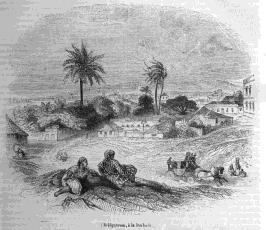
“…the true constitution of this [British] government in relation of their slaves their negroes an heathenish brutish and an unsertain dangerous kind of people to whom if surely any thing we may…”iWhile invaded by Spanish colonisers in the mid 16th century, where the Spanish committed genocide against the First Peoples’ inhabitation of the island; Ichirouganaim was occupied and colonised uninterruptedly by the British from 1627. The first ships trafficking captive Africans across the Middle Passage sailed into port from 1641. Across nearly two centuries of trafficking [1641-1837] a latest estimate records 449,554 captive Africans trafficked on embarkation, with a mortality rate of 17.2% where 371,809 captives were disembarked in Barbados. Transatlantic trafficking was one link in the machinery of the transatlantic trade, a foundation for how global modern economy was definedii. Land was cleared and natural ecosystems ripped up out of the soil to facilitate mass production for colonial profit. This wealth – from Barbados, from the entirety of the plantation economy – funded the development of empires.iii Intricately tied to the transformation of diverse natural ecosystems to monocultural models for the short-term extraction [and, over the long-term, ruin] of primarily sugar-cane crops, was the transformation of generations of Africans from people to commodity. This brutal dehumanisation was made systemic in violence, and written into policy. The 1661 Slave Code in Barbados was one of the first issued that determined the terms and conditions for he enslavement of Africans. British plantation colonies often had their own Slave Codes which broadly followed the Barbados blueprint. Signed September 24th 1661, this code was supposedly to “protect them [those enslaved] as wee doo many other goods and chattles”. This section of the document reads as an insurance policy on the ‘disposable goods’ of the enslaving class. Of the 23 clauses, the majority detail methods of torture mandated by this code to police the survival of enslaved populations. The headline quote of this brief section leads into this premise: that the profits taken from the plantation system could not exist without the dehumanisation of enslaved populations, without the governance of enslaved persons that is built around African, around Black peoples’ supposed ‘inhumanity’. This is the prelude to racial capitalism, recognisable in the profit of the few from the fruits of the labour of the many, founded on the made up ‘inhumanity’ of the majority.iv Sugar Islands: Ichirouganaim flattened Plantation estates covered almost the entirety of Barbados, which by 1834 came to an estimate of 2,317 estates in total. Drawing lines across every part of viable land enclosed enslaved populations into marginalised spaces with little traditional means of escape available. For instance marronnage, a key revolutionary tradition with movements across the Caribbean and Latin Americas, would have been more feasible for wide scale organising and sustainable maroon communities in islands such as Dominica, Jamaica for instance, where the environment has not been levelled or there are far more mountainous regions that protect from the military force of colonisers.v Resistance, as will be briefly looked at in a bit, would have manifested differently in Barbados. At one point during the 18th century in Barbados, there were at least 500 sugar mills in operation across the island. Between 1810-1830, with an average population of enslaved persons of 78,450 for that range, an average of 77% [same range] of this population were distributed to sugar plantations.vi From this data, it is clear that, if any other crop besides sugar was planted on Barbados, it was nowhere near the scale of profit reaped by sugar, and therefore nowhere near the political stronghold that sugar interests would have held for the local and absentee planter class – this will be significant later. Records of sugar production in Barbados also testify to the cruelty of the genocidal system of chattel enslavement, and, in the 19th century, the vicious outlook of a planter class unwilling to lose ‘their’ property to freedom, even when that freedom would be constricted by the priority of satisfying the interests of an imperial social order.vii Across a range of 1814-66, before, during and after Emancipation, average annual sugar production rates for Barbados alone show 3 focus points that cannot be understood just by an overall average across that time period.viii
- Between 1824-33 and 1834-38 (the latter period is the period of Apprenticeship that followed British Emancipation in 1834), there is a 36.8% increase of average annual tons of sugar production. Between an average of 14,838 tons of sugar produced per year between 1824-33, and an average of 20,309 tons of sugar produced per year between 1834-38.
- In the next period, between 1834-8 and 1839-46, there is a 22.9% decrease in average annual tons of sugar production.
- From that period of 1839-46 until the end of the data range between 1857-66, there is a 132.3% increase in average annual tons of sugar production.ix What this infers is that emancipated populations were disenfranchised of the opportunity of ownership and agency in how they earned their living, how/where they lived, remaining entrapped by the plantation system they were legally freed from.
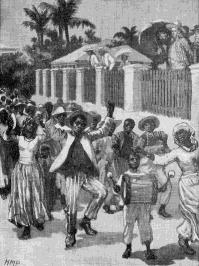
“[in 1871]…the entire foreign commerce of the West Indies was £10,600,000 and that this small island [Barbados] constituted nearly 1/4th of the whole”xivIn 1876 a new Governor of the Windward Islands [Barbados, St Vincent, Grenada, Tobago] was named, replacing his predecessor who himself was a substitute.xv A newspaper source at the time eloquently describes the man – an Irishman named Pope Hennessy – as entirely incompetent to the demands of his, and apparently, any job.xvi Whether fact or journalistic satire, this new Governor came into the leadership of the Windward Islands in the middle of a British Parliamentary debate on the merits of confederation in consolidating an equal (for a British elite of course) balance of imperial and localised powers in the colonies. Before widespread attempts at implementation in the 1880s-90s across the British Empire, British Parliament was debating the possibility of Confederation for instance across the Windward Islands in the Caribbean [for those of us who are Tobagonians, yes, this could have meant that our identity could have been tied to St Vincent and Grenada for instance, as opposed to annexed by Trinidad].xvii This Confederation would be, in the case of the Windward Islands, governed by legislative and executive bodies voted in/appointed into position by the Governor, still situated in Barbados.xviii We know that this first attempt at (con)federation failed in the 19th century as it another colonial version of this would fail on a wider scale in the 1950s-60s. One of the reasons this attempt at Confederation failed is the widespread revolts Bajan waged labourers launched in April 1876 – the Belmanna Riots in Tobago happened later that year, with likely strong connections according to some scholarshipxix – in reaction to Governor Hennessy’s attempt to put forward this confederate policy for the Windward Islands. Sources differ in the opinions of different parties around what are now known as the 1876 Confederate Riots, but story goes…that what British Parliamentary correspondence saw as an opportunity for concentrating localised power for planters in the Caribbean, while remaining within the British imperial administration, planters saw as abdicating power to waged labourersxx – power that, according to a class operating with the mythology of their own racial supremacy, would be far too dangerous in these hands. Story goes too, that waged labourers were told – by the Governor Pope Hennessy himself – that “it [confederation] will provide larger field…and thus check poverty and crime at its sources”.xxi Whether these were political promises for garnering support or the actual application of Confederation the Governor envisioned, that is uncertain. It is worth noting that, the support Hennessy attempted to galvanise through these statements – Afro-Bajan waged labourers, primarily – did not have the most fundamental (now) of political expressions (electoral power) unless they held a measure of land ownership and/or a certain sum of money to ‘earn’ a right to vote. This is part of the power that an elite planter class wanted at all costs to avoid being handed to populations that, mere decades before, were considered chattel and incapable of humanity without the scriptures of European colonisation. Around Governor Hennessy’s speech putting forward this Confederation policy, newspaper sources record planters getting equipped far in advance of either the widescale protests launched and organised by waged labourers, or of the Governors brutally militarised response to protests (the same voices he actively enabled).xxii In the days following the launch of these protests, colonial police forces arrested at least 320 persons, murdered 3 and injured 16.xxiii The irony appears that, perhaps had Governor Hennessy made his case differently, it could be understood what appears from primary and secondary sources: that the British Parliament interests, as well as those of the planter class in Barbados, were more in line with each other than opposed.xxiv The right to vote unrestricted by income or land ownership was fully realised in 1842, to a great extent due to the organising work of Dr Charles Duncan O’Neal in 1924, later picked up by his opponents in office Grantley Adams and the rest of the Barbados Progressive League (later to become the Barbados Labour Party, currently chaired by PM Mia Mottley) on Dr O’Neal’s death in 1936. The push to cementing this fundamental right was also lined by the work of Clément Payne before his deportation to Trinidad.
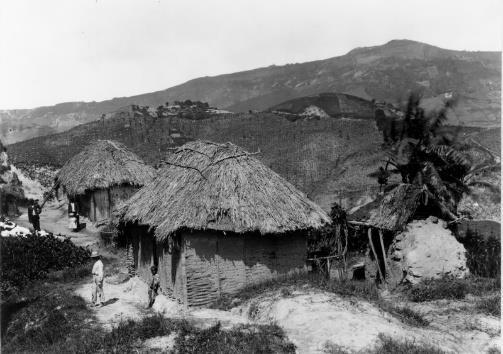
The early 20th century decades were marked, across the Caribbean, with revolutions, struggles and resistance united around key needs: waged labourers wanted answers to questions of being paid adequately, of having the right to own the land they worked, the right to be educated properly… The resistance notably voiced by such leaders as Clément Payne, Dr O’Neal were not silenced at their deportation or death, these were pre-existing movements that held a radical voice through these leaders, and would continue to organise in different avenues through to Barbados’ initial independence in 1966.
It remains important to note that these posts are only brief insights into far longer and far more complex histories of colonisation, resistance in Barbados today. As we have learnt from Lloyd Best, the structural underdevelopment of Caribbean islands built ‘from scratch’ on the annihilation of First People indigenous civilisations defines lasting underdevelopment of entire Caribbean societies. These are the realities we are unlearning, experiencing, fighting for today in an ongoing regional movement for transformative repair. When presenting at the Ghana Next Steps conference June 17th-19th 2026, Prime Minister Mia Mottley (Chair of the Prime Ministerial Sub Committee for Reparations) presented the revised CARICOM 10 Point Plan for Reparatory Justice as an indication of non-negotiable forms of social injustices and traumas that need restorative and/or reparative work to redress. Barbados’ history testifies to the resilience of peoples forced into a psyche of internalised colonialism and the enduring struggle to build better together.
i “An Act for the better ordering and governing of Negroes” Laws of Enslavement and Freedom in the Anglo-Atlantic World, accessed Jul 17, 2026, https://slaveryandfreedomlaws.lib.unb.ca/laws/17
ii Scanlan, Padraic X (2020), Slave Empire: How Slavery Built Modern Britain. United Kingdom: Little, Brown Book Group,
iii See previous reference
iv Robinson, Cedric J (2021), Black Marxism: The Making of the Black Radical Tradition. United Kingdom: Penguin Books Limited
v Honychurch, Lennox (2024). Resistance, Refuge, Revival: The Indigenous Kalinagos of Dominica. United Kingdom: Papillote Press,
vi Higman, B. W (1995), Slave Populations of the British Caribbean, 1807-1834. Barbados: Press, University of the West Indies,
vii Manjapra, Kris (2023). Black Ghost of Empire: The Long Death of Slavery and the Failure of Emancipation. United Kingdom: Scribner,
viii Green, William A (1987), British Slave Emancipation: The Sugar Colonies and the Great Experiment ; 1830-1865. United Kingdom: Clarendon,
ix Primary source data from Green (1987), data calculation and analysis from TRC research. x Green, British Slave Emancipation
xi Primary source data from Green (1987), data calculation and analysis from TRC research
xii Green, British Slave Emancipation, Higman, Slave Populations of the British Caribbean
xiii Green, British Slave Emancipation
xiv NYTimes, ‘Troubles in Barbados’, 29/04/1876 New York Times archive
xv Coulon Margaret (20
xvi NYTimes, ‘Troubles in Barbados’
xvii Turley (research director) 1971, British Parliamentary Papers: Correspondance and Papers relating to the Federation of the Leeward Islands of the West Indies and Recent Disturbances in Barbados 1871-76, the Irish University Press Series of British Parliamentary Papers, Southampton University
xviii NYTimes, ‘An Account’, 19/05/1876
xix Shepherd V & Beckles H ed, Caribbean Freedom: Society and Economy from Emancipation to the Present. Jamaica: Randle,
xx Coulon
xxi See previous reference
xxii NYTimes, ‘An Account’, 19/05/1876 xxiii NYTimes, ‘Troubles in Barbados’ xxiv Shepherd et al, Caribbean Freedom