
Beyond Apologies: Reparatory Justice in the News, June 2026
30th of June 2026
By The Repair Campaign
Global push for reparatory justice gains momentum with landmark Ghana conference
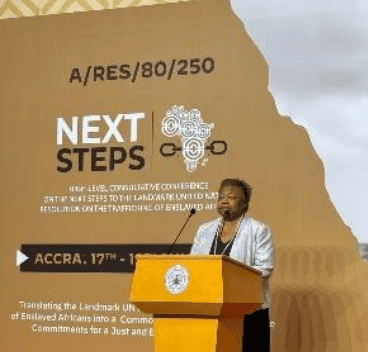
Ghana’s June 17th-19th conference, attended by multiple nations, organisations and advocates in the movement, aims to advance actionable commitments to reparations and reconciliation following the transatlantic slave trade.
Participant African, Caribbean leadership, representatives of partner organisations adopted a global framework for reparatory justice outlined in 19 points. These include reparatory measures of restitution, regional and global governmental reform, debt relief, gender, climate justice, as well as the establishment of a global reparations fund and more.
The Global Strategic Framework for Reparatory Justice emphasises the distinction between ‘compensatory reparations’ and acts of repair. Crucially, reparatory justice is not merely transactional. The historic theft was the start of the modern development of an entire system that steals from someone else’s labour for a profit that is not enjoyed by the labourer – regardless of the type of labour. So this theft goes beyond any sole monetary compensation such as European governments distributed to enslavers in the aftermath of their emancipations across the 19th century. This historic theft was all-encompassing, consuming everything within sensory range. Therefore the distinction made in the Next Steps document is extremely hopeful: any ‘compensatory reparations’ is a step among several devised to gradually enact wholescale transformative change.
The next steps of this framework, as indicated in the full outcome document, are outlined alongside suggested actions at national, regional, global levels. These include setting up groups to accompany the implementation of this framework, stronger transnational collaboration between relevant regional bodies and institutions both in the application of this 19 point plan as well as in the monitoring of its implementation.
This decision is historic, outlining a transnational plan of action for achieving repair that connects the needs for reparations with more concrete tools for implementation and indicates a more legible pathway towards enacting this justice.
CARICOM 10 POINT PLAN UPDATE: a new manifesto for repair
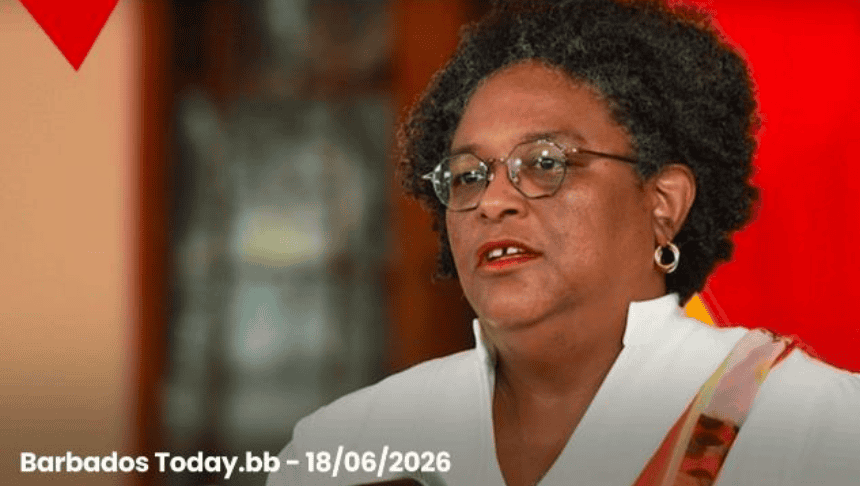
Speaking at the Next Steps Ghana Conference June 17th-19th, Bajan Prime Minister Mia Mottley announced the CARICOM’s new manifesto, yet to be validated by CARICOM governments.
First presented in 2014, the CARICOM 10 Point Plan [TPP] was first revised in 2018. The Plan itself is motivated by the urgent need for repair to redress deliberately underdeveloped realities defined by systemic traumas of colonisation. Crucially, the infrastructure and violence of these systems inflicted differential harms on Caribbean peoples that connect across all 10 points of the CARICOM plan. These layered traumas require both an intersectional and systemic approach to justice.
The revision to this plan [as provisionally shared with participants/attendees of the Next Steps conference] adds particular emphasis on correcting the trauma of gender injustices, as well as strengthening repair for the devastation of our ecosystems and the genocide suffered by First People indigenous communities in the Caribbean.
- The Caribbean region would not exist as it does today without the mass ethnic cleansing of its First Peoples, crimes foundational to colonisation. The juridical decisions that made up a subhuman status for First Peoples was determining for making up an inhuman status for African peoples that defined their enslavement and classification as commodity for centuries.
Genocide was the beginning of European colonisation. This was the violence used, for complete annihilation as a strategy for dispossession and control of land and resources. It is on these mass graveyards that the Caribbean was built. The survivors of this attempted mass ethnic cleansing are forced to contend with stripped rights, crippled culture, on land stolen from them and illegally settled by European invaders. This devastation is a traumatic history written in every part of our environments in the archipelago and confronted by all Caribbean communities.
European invading colonial powers made declarations, policies, court decisions devising a juridical structure around genocide as foundational to colonisation. The wealth extracted that stems from these crimes against humanity funded Europe’s development. The administration of the chattel enslavement of African peoples and plantation colonies was founded on this loss and only accounted for First Peoples as far as to legislate their continued isolation and marginalisation from plantation society. These are crimes against humanity for which the perpetrating institution must be held accountable.
The revised 10 point plan emphasises the long work required to invest into the preservation of First People indigenous histories, languages, cultures. As well as committing to the rehabilitation of basic education, care, ownership and self-determination of First People indigenous communities.
- Gender-based violence is a reality systematically entrenched into the structure and ideologies of societies in any way shaped by colonisation. The revised CARICOM TPP highlights the historical violence that shapes specific gendered inequalities today as a starting point to redressing how these traumas violently show today.
The harms enslaved women suffered during chattel enslavement intersected across racial and gendered forms of abuse and assault. The dehumanisation that determined the trafficking and enslavement of captive Africans starts with the violence of women and menstruators as ‘creating property from the womb.
The menstrual cycle spans an average of 28-30 days, 365 days a year for decades. A menstruator’s health must therefore always consider the individual’s cycle. No human life could exist without menstruators, and no enslaved ‘commodity’ born in the Caribbean could exist without enslaved women. The reproductive health of enslaved women was subjected to the policing of colonial powers, designing systems denying women and menstruators the rights, agency of their own bodies and care. The conditions of enslavement of a captive African woman and menstruator were determined by their fertility. European scientific ‘discoveries’ and investigations were experimented on or reaped from the bodies of enslaved women.
Directly as part of the everyday of chattel enslavement, the realities survived by enslaved women and menstruators were far different in every aspect from nutrition and hydration through weather, injury inflicted from the bodies of enslavers. Extreme forms of gender-based violence such as sexual assault, rape, femicide, were endemic to colonisation. Through the processes of colonisation, they have become endemic to society. GBV was systematically inflicted on women and menstruators, folded into systemic GBV against women and menstruators in the form of physical, emotional, economic, psychic traumas. These traumas are also intergenerational, with patterns emerging today in our bodies showing the legacies of this specific violence.
These traumas are foundational to the system of chattel enslavement. Reparatory justice for the legacies of the harms of chattel enslavement and colonisation must be understood starting from the intersecting harms descendent women and menstruators face today from the histories of these intersecting forms of GBV. The revised CARICOM 10 Point Plan addresses these specific harms and identifies the need for reparations that truly confront the dehumanisation of GBV during chattel enslavement, and the systems developed from that trauma that thrive today. The harms enacted against First People indigenous, African enslaved women and menstruators was the premise for the differential harms enacted against women and menstruators inclusive of colonial-assigned race. Variable systemic gender-based violence against women and menstruators is everybody’s problem, and correcting these systemic traumas must start with intentional actions through reparatory justice.
Following Prime Minister Mia Mottley’s presentation of the revised plan, approval is pending from CARICOM governments. It is the aim that this revised 10-Point-Plan will open up to more transformative work across the reparatory justice movement.
Next Steps Advisory Board: Caribbean representation

Following the June 17th-19th conference in Accra, Ghana, Professor Hilary Beckles, Prime Ministers Mia Mottley (Barbados), and Andrew Holness (Jamaica) have been appointed to the Next Steps advisory board in consultation for continuing transatlantic partnership in the work for repair.
The ‘Africa exception’ in global reparations: a legacy of slavery and colonialism

The international community’s reluctance to provide reparations to African nations and peoples for historical wrongs, such as slavery and colonialism, is rooted in a structural failure to recognize Black sovereignty, with France’s recent proposals being seen as insufficient and symbolic rather than substantial.
St. Lucia to host upcoming CARICOM heads of government meeting
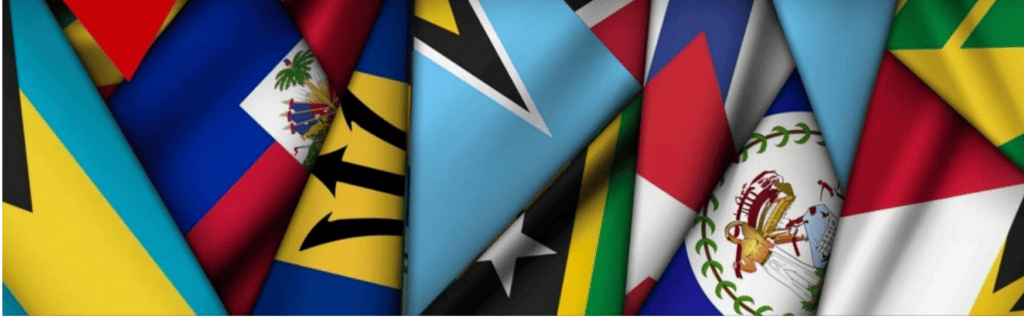
St Lucia is set to chair CARICOM for a six-month tenure as of July 2026. As chair, St Lucia will play a pivotal role in shaping the regional agenda, focusing on integration, cooperation, and development among member states. Continuing ongoing work, St Lucia’s chairmanship could strengthen the global platform for St Lucia and CARICOM to further push for progress on reparative justice.
Jamaica to petition King: Taking reparatory justice to the ‘next level:
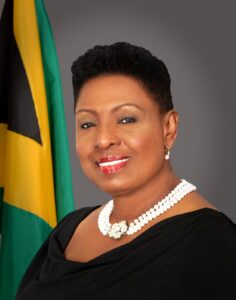
September 6th will mark 245 years since the Zong ship embarked with 442 captive Africans for Jamaica, where 140 captives were thrown overboard to facilitate insurance claims. On this day, a Jamaican delegation is set to petition the British king in the UK in a move to further their fight for reparatory justice. This petition would request the British king’s support in obtaining legal and juridical advice from the London-based Privy Council in Britain’s obligation towards providing restitution to Jamaica for its [Britain] crimes in the system of chattel enslavement and lasting legacies.