Reparations in the News - April 2026
Guyana’s history has been central to The Repair Campaign April newsletter feature. Here is a brief roundup of a few such events during April 2026, in which reparatory justice took a central focus.
Guyana advocates for reparatory justice at the UN
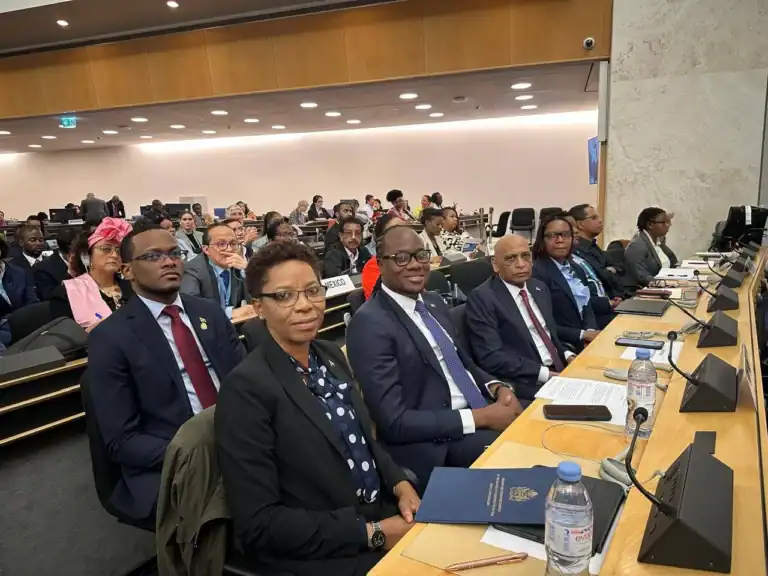
At the Fifth Session of the United Nations Permanent Forum on People of African Descent in April 2026, Guyana’s Minister of Culture, Youth and Sport Hon. Steven Jacobs advocated for concrete reparations to address the enduring legacies of slavery and colonialism, saying that the Second International Decade for People of African Descent must be a “decade of delivery”.
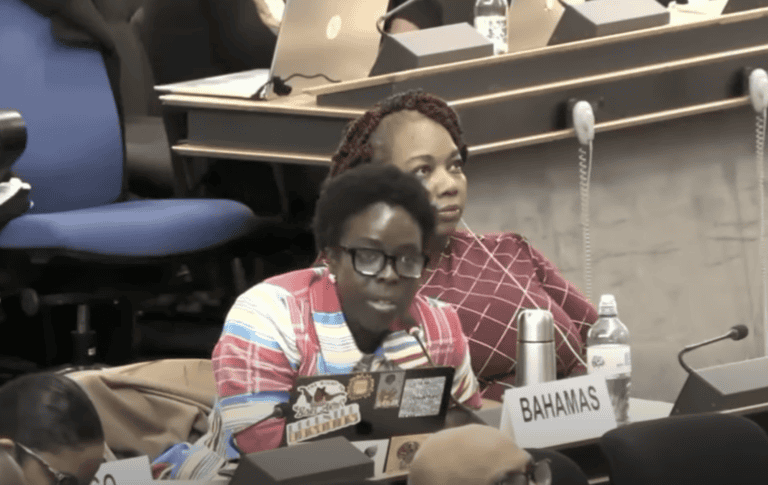
Fifth Session of the Permanent Forum on People of African Descent in Geneva, Switzerland: Dr. Niambi Hall-Campbell Dean, Chair of the Bahamas National Reparations Committee speaks
“We are not here to ask for permission to exist; we are here to demand the restoration of the history that was stolen from us to ensure our future is no longer defined by our erasure”, speaking at the Fifth Session, Dr Hall-Campbell Dean issued a powerful reminder that repair must be driven by grassroots communities, must move with Haiti’s demands for repair first and foremost, and must not be coordinated by the same tools that were used to build infrastructures of oppression.
“We must ultimately seek our own spaces free from the funding whims of those invested in our degradation”.
Barbados launches ‘Season of Emancipation’ amidst $4 trillion reparations valuation
During this period of cultural and educational programming, Barbados’ Season of Emancipation aims to move the narratives and realities of enslavement from a historical footnote to a central pillar of Bajan policy. With this launch Barbados signal a new phase in its push for historical justice.
Reparation for Enslavement: A Global Analysis by The Guardian UK
As the Legacies of Enslavement programme looks towards the next phase of its work, the Guardian UK released an interactive discussion of the economic, social, and policy-driven frameworks it has thus far uncovered in the UK to address the historical legacies of transatlantic enslavement.
Restitution of stolen artefacts from France
On April 13 the French National Assembly passed a landmark bill by 170 votes designed to streamline the return of cultural artifacts and artworks stolen from former colonies, allowing countries to request the return of items that were forcibly or illicitly taken between June 1815 and April 1972. The law will be received by the French Senate before it can be ratified.
Nantes’ confrontation: The wealth of European port cities built from the profits of chattel enslavement
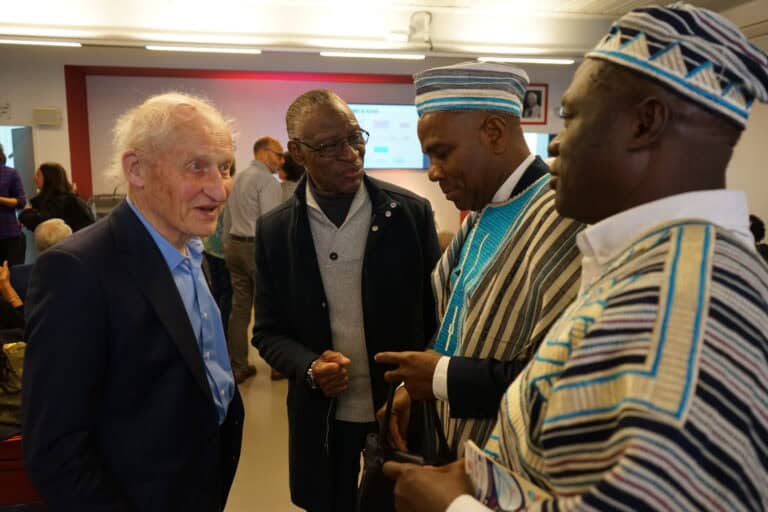
Pierre Guillon de Prince, and 86-year-old French descendent of a shipping trader family publicly acknowledged his lineage complicity in transatlantic enslavement. This apology took place on April 18 during a four-day summit on reparatory justice, gathering local and regional voices in the movement for repair, organised by La Coque Nomade-Fraternite.
Congratulations to the winners of the 2026 International Reparation Debate Competition – Our Lady of Fatima College Trinidad and Tobago
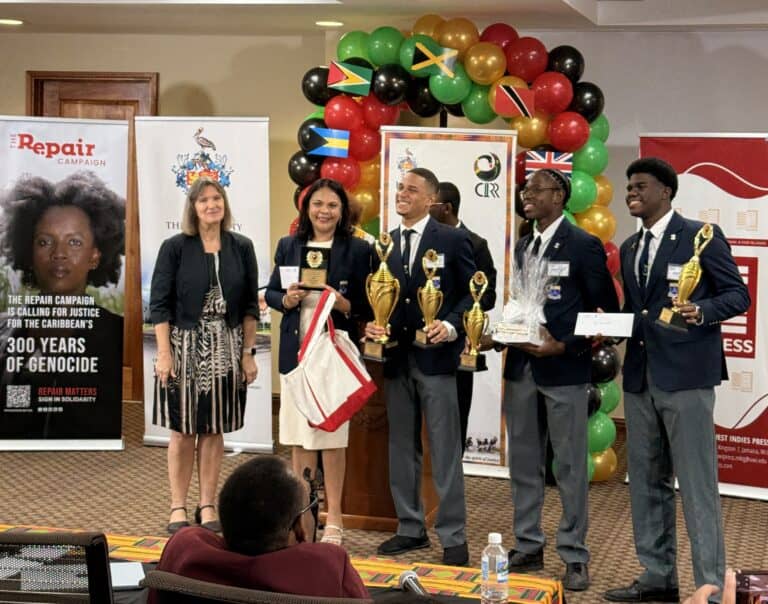
On 22 April the grand finals of the Centre for Reparations Research’s International Reparation Debate Competition culminated in a momentous victory for Trinidad and Tobago’s Our Lady of Fatima College, surpassing Jamaica’s Clarendon College as this year’s runners-up. Congratulations to the passionate student debaters and all 36 teams who participated.
Communities gather in town halls across Guyana to call for reparations
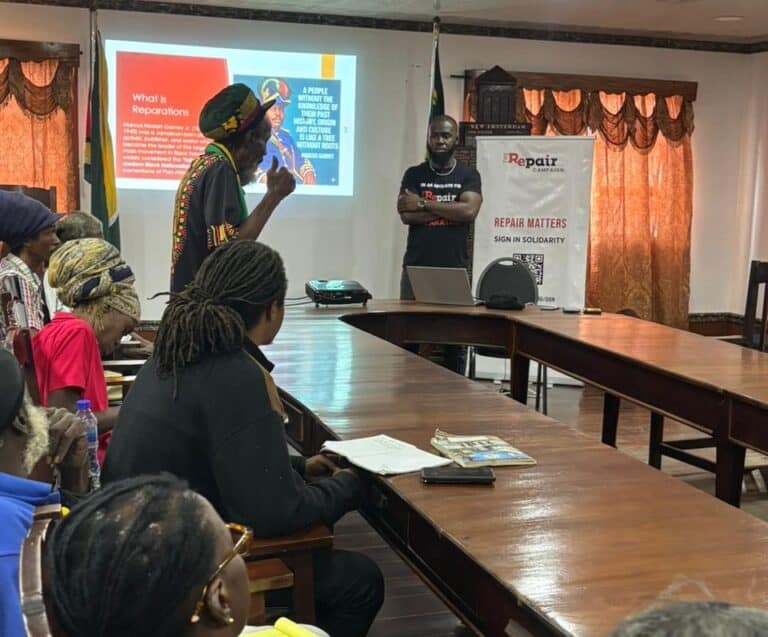
Voices United: The Repair Campaign Sparks Transformative Action in New Amsterdam to discuss the importance of a formal apology from the UK in seeking reparatory justice for Guyana and next steps in advancing the movement.
On April 26, 2026, the mission for reparatory justice found a powerful resonance in New Amsterdam. In a landmark collaboration with the Mayor and Town Council, The Repair Campaign hosted a Town Hall Meeting that transcended simple dialogue, turning into a profound moment of unity and strategic planning.
The room was charged with an energy that only surfaces when a community recognizes its collective power. With 35 key leaders in attendance—representing a massive collective constituency across Region 6—the discussion centered on the urgent need for a full and formal apology and the roadmap toward justice.
A Convergence of Purpose
The meeting was notable for its diverse representation, bringing together voices that are often distinct but were here united by a common cause:
- The Rastafarian Community: Represented by the House of the Nyahbinghi.
- RAPAC: The Afro-centric organization based in New Amsterdam.
- Municipal Leadership: Led by the Mayor and members of the Town Council.
Forging New Bonds
The most significant outcome of the day wasn’t just the talk, but the action. In a historic move, the Rastafarian community and RAPAC committed to merging their efforts for local community work. Furthermore, all parties pledged a firm commitment to The Repair Campaign to advocate for the goal of reparatory justice.
Despite differing backgrounds, the message from New Amsterdam was clear: When we stand together, our voices cannot be ignored.