
“Reparations is and must become a world view accepted by more of our people especially those at the grassroots level.”
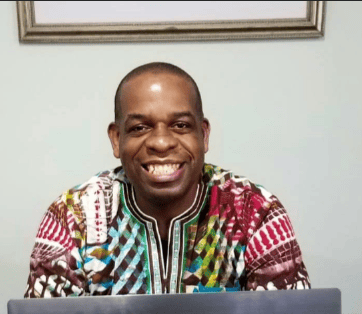
The Repair Campaign’s Trinidad and Tobago Community Organiser Lovell Francis speaks about his work in reparatory justice across the twin islands
1st April 2026
When we look back today at the colonial era of the Caribbean, it is often difficult to tell what we the inheritors of its varying legacies are really observing. From a modern vantage point, colonialism could look like an ominous omnibus system that dominated every aspect of life in this region – and make no mistake to a significant extent it was. And yet, oftentimes we give it and its creators far too much credit. It is easy to forget that colonial processes were in many ways an adhocracy created piecemeal as the situation on the ground and the demands of an evolving Western European desire for wealth creation dictated. People arrived here, without any clear plan beyond the desire to get rich or die trying but with the willingness to do whatever it took, irrespective of how destructive or inhumane, and regardless of who was going to be brutalised along the way.
Of course, we know that the two most famous end results of this ethos and history were the almost total annihilation of the First Nation Peoples of this region and the other original sin, the capture and centuries long enslavement of millions of West Africans. Moreso, the culture, ideas and philosophies that were reinforced by centuries of European domination have become so entrenched that they continue to affect us and often in ways we do not see.
Take for example, in a few days from now the Repair Campaign, will be hosting an innovative event for its community members in Trinidad and Tobago entitled “Chants in Reparations.” The idea is very simple: one hundred people who believe in the ideas, ethos and cause of Reparation coming together to sing songs of repair, whilst networking and in doing so strengthening a growing movement at the grassroots level.
Good stuff, and as the overall organiser of this event, I have a team working with me, but there are some things I just prefer to do for myself. Furthermore, as an old school Trini “limer” I do not believe in inviting grown people out of their homes, without the provision of (ahem) some “libation” if they desire to partake. So, on Sunday I took a drive to a popular grocery here to acquire some bottles, only to realise that I too still have some vestiges of that colonial world view etched into my brain. When I looked at the things that I was going to purchase, all foreign, all imports, nothing local, nothing ours, I was forced to ask myself some difficult questions and to make changes, and I did. Please note that I am a trained academic historian with a broad understanding of the European History of this region and the Caribbean History that grew out of its ashes and still my reflex response was to look beyond us and ours.
This is why Reparations and the work currently being done by the Repair Campaign in this region remain vitally important. Whereas there are those who will still dismiss the idea of this kind of repair as a dream for recompense that will never be accomplished, it is so much more than that. Reparations is and must become a world view accepted by more of our people especially those at the grassroots level.
More than that, the idea of Caribbean people of all stripes having the agency and efficacy to do the work of fixing themselves in the ways that they deem necessary is as vital to our survival, growth and development as a civilisation as any kind of (very deserved) monetary compensation from those people across the Atlantic who wronged our ancestors.
The legacies of enslavement are still with us almost two centuries after the overt end of the system and we must do everything we can to rid ourselves of its vestiges, so this important work must continue and there is no one better suited to it than us.