
Ah Cyah Behave Mehself’: Celebrating Carnival season in Trinidad
In February 2026, Trinidad celebrated its annual Carnival season, with celebrations from Calypso Monarch, Traditional Mas, Kalinda/Stick-fighting, Extempo…competitions and Canboulay re-enactments.
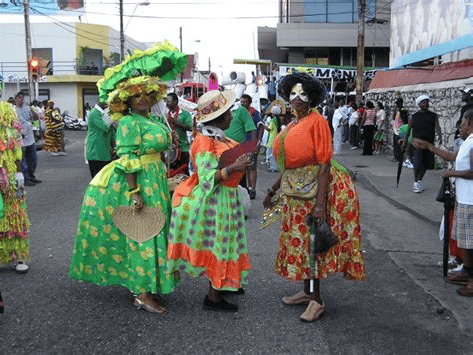
Carnival arose in the late 18th century as a form of resistance responding, making satire, of French Creole planter class Carnaval masquerade. Mas’ traditions were reinvented by African enslaved populations; as a way of fighting brutal physical and psychical dehumanisation on the estate, as a way of organising resistance on the estate and after Apprenticeship (1838), as a way of carrying the memory of Western African heritage, as a way of asserting a humanity and freedom in the cracks of a marginal existence. Some of the figures of Carnival traditional mas’ include:
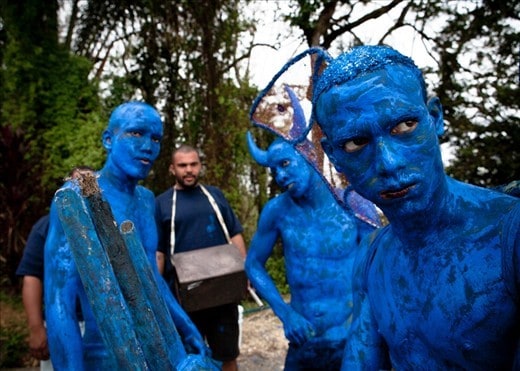
Jab Molassie/Blue Devils: covered in blue or black dye or paint, Blue Devils will carry whips or pitch forks, often wearing chains, old clothes or rags. Imps – other Blue Devils – will take turns holding the chain while one dances. All move and shout to the lavway, reinforced by an engine room, ‘[call] Pay the Devil! [response] Jab Jab!’. Jab Molassie mas’ transforms the deep traumas of the foreman’s whip and torture on the sugar plantation estates (Molassie like molasses) into the liberating choreography of Carnival. Jab Jab mas’ is also recognisable across several other Carnival traditions in the Caribbean.

Moko Jumbie: always on stilts, usually with long flowing clothes, these are also part of Carnival traditions and stories of resistance across the Caribbean. There are several stories of origin for the Moko Jumbie. Some say they are spirits come from across the Middle Passage to carry the souls of captive and enslaved Africans back home to rest, some say they are diviners able to foresee evil faster than others, some say they are ghosts that can take over you…all agree they are fierce spirits of haunting and protection. Crick crack!
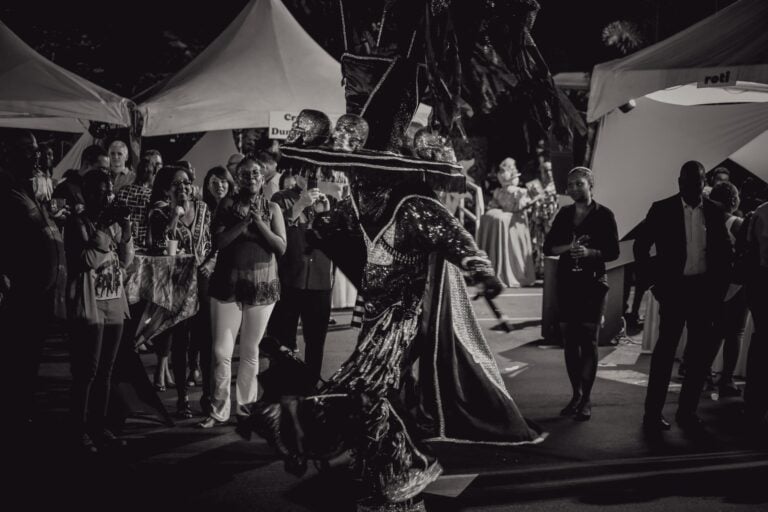
Midnight Robber: recognisable by their wide-brimmed tall hat and flowing cape, the Midnight Robber will tell stories, make up fabulous narratives of their exploits, mock anyone they want to teach a lesson or carry a message. This mas’ comes from the figure of the Griot in West African traditions, as widely respected storytellers, messengers, teachers.
Beat Pan! Steelpan excellence in Trinidad and Tobago’s National Panorama competition 2026
Congratulations to the winners of this year’s Panorama Competition: San Juan East Side Symphony (San Juan, Trinidad) [single band category], Uptown Fascinators (Shaw Park, Tobago) & Southern Stars Steel Orchestra (Siparia, Trinidad) [small band category], Pan Elders Steel Orchestra (San Fernando, Trinidad) [medium band category], Exodus Steel Orchestra (St Augustine, Trinidad) [large band category]
Steelpan is a movement culturally borne from Trinidad’s struggles against the master planter class in the 19th century between the hills of Laventille and across downtown Port of Spain to the streets of St James. Materially, the instrument was created in the interwar and Second World War years recycling used biscuit tins, oil drums and metal materials to combat the restrictions of colonial authorities in echoes of 19th century Shango drumming practices and turn of the century tamboo bamboo bands. Steelpan practice is firmly situated in Trinidad’s long history of resisting the oppression of the system of chattel enslavement, its rebranding in the policies of disenfranchisement and dispossession targeting emancipated Black African populations, its entrenching in the infrastructure of Trinidad and Tobago’s development. Creative expressions have always been the thrust of Caribbean stories of resistance, and the movements in Trinidad and in Tobago fully demonstrate this. The steelpan movement is a triumph of communal resistance to colonial power through the reinvention of discarded materials by hands discarded by their oppressors. From Eric Williams’ premiership in 1956, clientelist policies pushed sponsorship onto the steelband movement, enabling the instrument and its communities to be further refined into an entire musical practice. Today steelpan is taught, practised worldwide, gathering players in Trinidad and Tobago and the diaspora annually in celebration and competition in the Panorama season.