
Beyond Aid: Leveraging CARICOM Integration for Global South Prosperity
African Caribbean Sustainability & Investment Summit (ACSIS 2025) 21-22 November 2025 Queen's Gate House, London, UK
22nd of November 2025
Speaker: Eric Philips
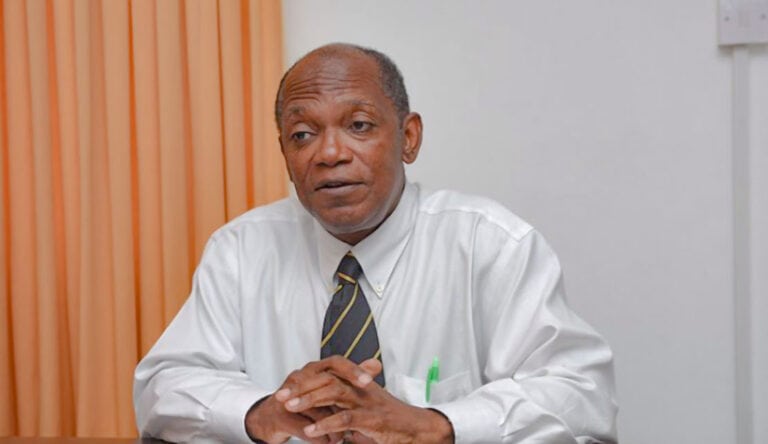
Good morning, distinguished delegates, investors, policymakers, and friends. When you walk through the city of London, past the Bank of England, past the Grand Insurance Houses of Lloyds, past the marble monuments of Channel Meadow Street, you’re walking through a museum of Caribbean labour. The Caribbean did not merely contribute to British wealth, we were British wealth. Our ancestors’ stolen labour built these institutions. Their unpaid wages capitalised the Industrial Revolution. Their blood, sweat, and tears and stolen lives created the foundation upon which modern Britain stands.
And it is time, fast time, for that debt to be repaid.
Today I stand before you not to ask for charity, not to beg forgiveness, but to demand justice, to present a comprehensive, financially viable, legally sound blueprint for Caribbean reparations that will transform CARICOM from independent territories into an economically integrated powerhouse – a model for the entire Global South.
Let me be direct, reparations are not unprecedented, they’re proven practical and politically achievable.
Germany has paid $89 billion dollars in Holocaust reparations since 1952 – 73 years of payments, not just to individual survivors, but to the State of Israel, an entire nation built in part on the acknowledgement of historical wrongs. The German economy did not collapse because of that, instead it accompanied the Wirtschaftswunder – the economic miracle. In 1988, the United States paid $1.6 billion dollars to Japanese Americans interned during World War II. $20,000 per person, no lawsuits were required. President Reagan signed the Civil Liberties Act, acknowledging ‘we admit a wrong’. New Zealand has settled £1.2 billion pounds with Maori communities. Returning land, fisheries and cash, whilst issuing formal Crown apologies.
These settlements haven’t weakened New Zealand. They’ve strengthened it by addressing historical injustice.
So when people say reparations are impossible, history says otherwise, so the question is not if reparations can be paid, the question is when will Britain and the Netherlands do what Germany, America and New Zealand have already done?
Now let’s talk numbers because reparations is not a vague moral gesture, it’s about quantifiable economic stuff. Our research team has employed three dependent valuation methodologies, all converge in the same conclusion. The minimum owed to CARICOM nations is between £463 billion and £1.89 trillion pounds, the minimum. Some say £112 trillion.
The £460 billion is a lost wage model (compound interest). The £1.34 trillion is an enrichment model (10% of GDP impact). The £1.89 trillion is a wealth gap model (per capital harm).
Let me break down just one methodology, the last three 2.3 million African were enslaved in the British and Caribbean in 1640 and 1834. They worked an average 25 years each without pay at prevailing wages of £20 pounds per year, a conservative estimate – that’s £1.15 billion in stolen wages.
Compound is at a modest 3% annual interest over 191 years. And you reach £389 billion pounds just from Britain. And the Dutch component, we’re at £463 billion pounds.
But we’re not demanding £463 billion pounds per year upfront. We proposed something far more reasonable. A Reparations Sovereign Wealth Fund – the RSWF, modelled on Norway’s Government Pension Fund, the world’s most successful sovereign wealth fund.
Here’s the genius of this model, £100 billion pounds invested wisely becomes £287 billion pounds in 30 years. That’s a 6.5% annual return, the historical average for sovereign wealth funds. UK’s annual contribution will be £2.33 billion.
That’s 0.08% of the UK’s GDP. Less than Britain spends on overseas aid. Less than the cost of a single aircraft carrier. And here’s what the naysayers won’t tell you, reparations are not just morally right, they’re economically beneficial. A prosperous Caribbean means expanded trade with Britain, it means new markets for British goods, it means investment opportunities for British firms. Germany didn’t impoverish itself through reparations to Israel – its economy thrived. The same will happen. Now you might ask, how do we compare Britain and the Netherlands to us? We have a multi-jurisdictional legal strategy with three parallel tracks, each designed to create irresistible political and moral pressure. Track 1: International Court of Justice Advisory Opinion. CARICOM nations will request that a UN General Assembly resolution an ICJ opinion on the legal consequences of the transatlantic slave trade and an obligation to provide reparations. The ICJ, Chagos Islands Opinion in 2019, forced Britain to acknowledge its unlawful occupation of Mauritian territory. The Court’s Palestinian Wall opinion affirmed the right to reparations – these precedents are on our side.
An ICJ opinion will be binding in a strict sense, but will be morally authoritative and politically devastating for any government that ignores it. Two… U.K. Parliamentary Legislation. We will work with sympathetic MPs, and there are many…to introduce a Reparations Bill. The Gurkhas won pension justice through Parliament in 2007…the Windrush victims are still fighting for compensation today. We will mobilise 1.2 million Afro-Caribbean voters in the UK. We will ensure that every MP understands reparations are not just a Caribbean issue, they are a British electoral issue. Track three, Dutch constitutional mechanisms. The Netherlands has a unique tool, the Constitutional Right of Petition. We will submit a formal claim on the Article 1 of the Dutch Constitution, which guarantees equality for the law. Dutch civil society is already sympathetic. Eleven municipalities apologised, the Dutch Prime Minister apologised, and the Dutch King has apologised.
There have been 15 official apologies for slavery in the Netherlands. Timeline. The ICJ opinion is within 24 months. UK legislation can happen within 36 months. And that’s to take a resolution within 18 months. These aren’t abstract legal theories. They’re actionable strategies. Clear pathways, historical precedents, and political allies in place.
But this is more than a secure payment. This is about transforming Caribbean development model. Too long CARICOM has been trapped in a cycle of aid dependency. It is discretionary. It is conditional. It comes with strings attached. It treats us as supplicants rather than equals. Reparations are different. Reparations acknowledge that the wealth we seek is not charity, it was stolen from us and is rightfully ours. With a reparations album as far as our foundation, CARICOM will achieve what has eluded us for decades. Through economic integration, imagine a Caribbean powered by 80% renewable energy, solar farms against Jamaica, with turbines off Barbados, battery storage in Trinidad. Energy independence funded by reparations. No more dependence on the important fossil fuels. No more vulnerability to oil shocks. Instead, a green and blue economy that makes the Caribbean a climate leader and not a climate victim. Imagine a Caribbean single market that actually functions, harmonising regulations, a regional digital currency, and blockchain-enabled custom systems. Goods, services, and people fleeing fully across 15 other states. Not because agencies recommend it, but because we have the capital to do so. Imagine world-class universities drafting investments from Africa, Asia, and Latin America, or would ask for returning homes, not fleeing abroad. Technology hubs in Kingston, Port of Spain, and Georgetown, rivalling those in Lagos and Nairobi. A knowledge economy built on a reparations-funded education strategy.
This is not fantasy. This is financially modelled, legally grounded, and achievable. And it’s not for the Caribbean – this model-reparations as infrastructure for integration, can be replicated across the Global South. African nations are watching…Pacific nations are watching…Indigenous communities worldwide are watching.
If CARICOM succeeds, we will unlock a part of the injustice to billions of people whose ancestors suffered under colonialism and slavery. We are not seeking slavery…we are demanding justice…we are not begging for aid…we are reclaiming what was stolen and when justice is done, the Caribbean will rise – not as supplicants, but as architects of a new global order. So, what’s the call to action? So, what do we need from you, the investors, policy makers, civil society leaders, and the diaspora members in this room? Advocate in good faith.
To the UK and Dutch governments…establish the Reparations Sovereign Wealth Fund, issue formal apologies. Do what Germany, America, and New Zealand have already done. History will judge you, not by whether you were asked, but by whether you acted. To the Caribbean Member States, Unite behind the Reparations Commission…present a single coordination front. Fragmentation is our enemy…solidarity is our strength. File an ICJ resolution…draft parliamentary bills.
Make this a diplomatic priority of our generation. To investors and financial institutions, the Fund will seek ethical capital partnerships but this is not charity…this is impact investment with guaranteed government backing, transparent governance, and measurable returns. Norway’s sovereign fund manages 1. 6 trillion, our fund can grow to a similar scale…get in early! Align your values with your portfolio.
To the African and Caribbean diaspora, You’re 1. 2 million voters in the UK, millions more across Europe and North America… you’re the moral conscience that will not let this issue fade. Lobby your MPs…write to your MEPs. Organise. Mobilise. Make reparations a voting issues in every election. To the civil societies and NGOs, document the intergenerational harm. Tell the stories – use your platforms…partner with university think tanks and media organisations. Make reparations not just a legal claim, but a cultural movement that cannot be ignored. The work has already begun – the legal groundwork is being laid. The economic models are complete. What we need now is political will and what we need is courage – what we need mostly is you.
In closing… 190 years ago, the British Parliament paid off £20 million, equivalent to £2.4 billion today to compensate slave owners for their loss of property. When slavery was abolished, the enslaved received nothing, not a penny, nor an apology, not an acre of land – that debt has never been repaid, the interest is compounded. The injustice has been metastasised across generations – our grandparents bore it, our parents bore it, we have borne it, however, our children will not and shall not.
We do not seek charity, we seek what is owed – we do not seek aid, we seek justice, and when justice is done, the Caribbean will rise – not as supplicants, but as architects of a new global order. An order built on equity, sustainability, and a truth that prosperity delayed is prosperity denied. The time for reparations is now, the mechanism is clear – the path is open, so let us walk it together.
Thank you.